


 English
 Español
 Pусский
 العربية
 Français

If you're a motorcycle enthusiast, you understand the significance of a healthy battery. Your motorcycle's battery serves as the heartbeat of your bike, supplying the power required to ignite the engine, illuminate the lights, and operate various electrical components. Without a dependable battery, your motorcycle sits idle and silent, robbing you of the thrill of the ride.
To ensure your battery is always prepared to power your adventures, trickle charger for motorcycle battery come to the rescue. These specialized devices are designed to nurture and optimize your battery's health, particularly during periods of inactivity. Whether you're storing your bike for the winter, embarking on an extended journey, or simply riding less frequently, a trickle charger for motorcycle battery can make a world of difference.
But with great power comes great responsibility, as they say. Using a battery maintainer is not just a plug-and-play affair; it requires a thorough understanding of the device, your battery, and crucial safety precautions. In this comprehensive guide, we'll leave no stone unturned. PZP will explore the importance of motorcycle batteries, the inner workings of battery maintainers, selecting the right one, using it effectively, maintaining battery health, and troubleshooting common issues. Most importantly, we'll delve deep into the safety measures you should never overlook when working with these devices.

The Vital Role of Trickle Charger for Motorcycle Bettery
Before we dive into the intricacies of trickle charger for motorcycle battery, it's imperative to grasp the critical role motorcycle batteries play in your riding experience. These seemingly unassuming power sources deliver on multiple fronts:
Igniting the Engine: When you turn the key or press the ignition button, your motorcycle's battery sends a surge of electricity to crank the engine to life.
Powering Lights and Electrical Components: Your battery is the source of power for your headlights, turn signals, brake lights, and various electrical features such as the horn and clock.
Running Accessories: Many modern motorcycles come equipped with accessories like heated grips, audio systems, and GPS units. These devices rely on your battery to operate smoothly.
Energy Reservoir: In situations where your motorcycle's alternator may not provide sufficient power at low engine speeds, the battery acts as an energy reservoir, ensuring a steady supply of electricity.
Given these crucial functions, a dependable motorcycle battery is not just a luxury; it's a necessity for an uninterrupted and enjoyable riding experience.
Demystifying Motorcycle Battery Maintenance
What Exactly Is a Motorcycle Battery Maintainer?
A trickle charger for motorcycle battery, often referred to as a battery tender or charger, is a specialized device meticulously crafted to nurture and optimize your motorcycle's battery. These devices prove their worth, particularly when your bike may sit idle for weeks or even months during periods of inactivity. Their primary mission is to ensure your battery remains in optimal health, fully charged, and ready to power your bike whenever you're eager to hit the road.
Here are some common scenarios where trickle charger for motorcycle battery prove invaluable:
Winter Hibernation: Many riders store their motorcycles during the harsh winter months when road conditions become less favorable. During this downtime, your motorcycle may accumulate dust, and your battery may deteriorate without proper care.
Extended Getaways: If you're planning an extended vacation or a trip away from your motorcycle, similar risks apply. A discharged or sulfated battery can cut your trip short or surprise you with problems upon your return.
In essence, a motorcycle battery maintainer serves as a guardian for your battery. It ensures your battery remains in peak condition, always ready to deliver a potent kick when you twist the throttle. These devices are designed to be user-friendly, making battery maintenance a hassle-free experience.
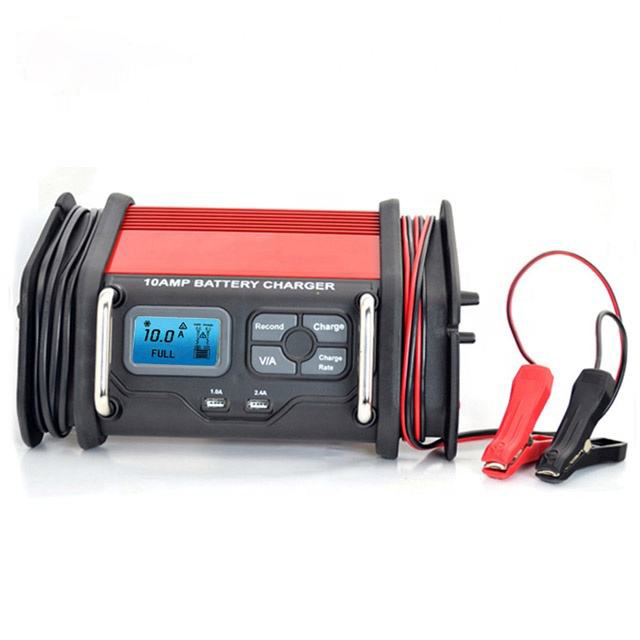
The Science Behind Motorcycle Battery Maintenance
Unpacking Trickle Charging
At the heart of motorcycle battery maintainers lies the concept of trickle charging. To understand this better, let's first explore the essence of trickle charging itself. Trickle charging is a gentle and gradual charging method that delivers a low, steady current to the battery. Unlike rapid charging, which can generate excessive heat and potentially damage a battery, trickle charging is slow and deliberate.
Trickle charging serves several crucial purposes:
Preventing Discharge: By maintaining a constant charge, trickle charging thwarts the battery's tendency to self-discharge over time. This ensures the battery remains at an optimal voltage level, always ready to kickstart your motorcycle.
Sulfation Prevention: Another pivotal function of trickle charging is preventing sulfation, a common issue in lead-acid batteries. Sulfation occurs when sulfate crystals accumulate on the battery plates during discharge, decreasing capacity and overall performance. The constant, low-level charge from a maintainer discourages the formation of these crystals.
Long-Term Maintenance: Trickle charging is tailor-made for long-term battery maintenance, such as during winter storage or extended getaways. It guarantees your battery stays in peak shape, waiting to unleash its power when you decide it's time to ride.
Embracing Desulfation
Some advanced motorcycle battery maintainers go the extra mile by offering desulfation capabilities. Desulfation is the process of breaking down and removing sulfate crystals that may have formed on the battery plates. This feature proves particularly valuable for older batteries that have already encountered some level of sulfation.
Desulfation operates by applying controlled, high-frequency energy pulses to the battery. These pulses work to dismantle the sulfate crystals, effectively breathing new life into the battery and restoring its performance. However, it's important to note that desulfation is not a guaranteed remedy for severely sulfated batteries, but it can work wonders in many cases.
Automatic Operation for Effortless Maintenance
Modern motorcycle battery maintainers prioritize user convenience. They typically operate automatically, which means you can plug them in, connect them to your battery, and let them work their magic without constant supervision. Here's how their automatic operation unfolds:
Continuous Monitoring: The maintainer continuously monitors your battery's condition, keeping tabs on its voltage and charge level.
Adjustable Charging: When the maintainer senses that your battery's voltage has dipped below a certain level, it springs into action, providing a charge. The charging rate and voltage are carefully adjusted based on your battery's specific condition, ensuring it receives just the right amount of energy to maintain an optimal charge.
Idle Mode: Once your battery reaches the ideal voltage level, the maintainer shifts into idle mode. In this state, it administers a very low maintenance charge, just enough to keep the battery at its peak without the risk of overcharging.
Overcharge Protection: Automatic maintainers are equipped with overcharge protection to safeguard against battery damage. Once your battery reaches a fully charged state, the maintainer reduces the charging rate to prevent overcharging.
Safety Features: Shielding Battery and Device
Safety is paramount in the design of motorcycle battery maintainers. These devices come equipped with an array of features to protect both the battery and the maintainer itself from potential hazards. Here are some safety features to look out for:
Short-Circuit Protection: This safeguard prevents accidental short circuits by detecting improper connections and shutting down the maintainer to prevent damage.
Reverse Polarity Protection: If the maintainer's clamps are connected in reverse (positive to negative and vice versa), this feature ensures that the maintainer won't operate, avoiding damage to the battery and the maintainer.
Spark-Free Connection: Maintainers are designed to offer spark-free connections when attaching the clamps to the battery terminals, reducing the risk of sparks that could ignite flammable gases.
Overload Protection: In case of a power surge or overload, the maintainer can shut down automatically to prevent damage to the device and your battery.
Temperature Compensation: Some advanced maintainers feature temperature sensors that adjust the charging rate based on the ambient temperature, ensuring safe and efficient charging in various conditions.
By incorporating these safety features, manufacturers aim to make motorcycle battery maintenance as worry-free and secure as possible.

Choosing the Best Motorcycle Trickle Charger
Selecting the right best motorcycle trickle charger is a critical step toward ensuring your battery receives the care it deserves. With various options available, it's essential to consider the following factors:
Battery Type Compatibility - Start by identifying the type of battery your motorcycle uses. Common battery types include lead-acid, AGM (Absorbent Glass Mat), and lithium-ion. Each type has specific charging requirements, and using an incompatible maintainer can lead to damage. Make sure the maintainer you choose is suitable for your battery type.
Voltage Compatibility - Motorcycle batteries typically come in 6-volt and 12-volt variants. Ensure that the maintainer you select matches the voltage of your battery. Using a 12-volt maintainer on a 6-volt battery or vice versa can result in incorrect charging and potential damage.
Capacity and Amperage - Consider the capacity and amperage output of the maintainer. A higher output is generally better for quickly charging a depleted battery, but it should also have a lower maintenance mode to prevent overcharging once the battery is fully charged.
Smart vs. Basic Maintainers
Smart maintainers, also known as microprocessor-controlled maintainers, offer advanced features such as automatic voltage and current adjustments, temperature compensation, and desulfation capabilities. While they are more expensive, they provide enhanced battery care and flexibility.
Basic maintainers, on the other hand, offer straightforward charging without many advanced features. They are generally less expensive but may require more manual monitoring.
Ease of Use - Look for a maintainer that is user-friendly and straightforward to operate. Features like LED indicators, automatic operation, and clear instructions make the maintenance process hassle-free.
Safety Features - Prioritize maintainers with robust safety features like short-circuit protection, reverse polarity protection, and spark-free connections. These features ensure safe operation and reduce the risk of accidents.
Portability and Storage - Consider the size and weight of the maintainer, especially if you plan to transport it frequently. Some maintainers are compact and portable, making them ideal for on-the-go battery maintenance.
In the world of motorcycles, few things are as essential as a healthy battery. Your battery is the lifeblood of your bike, providing the power needed to start the engine, run the lights, and operate various electrical components. Without a reliable battery, your motorcycle remains silent and stationary, robbing you of the joy of riding.
By understanding the importance of a best motorcycle trickle charger, how it works, and how to choose the right one, you've taken a significant step toward ensuring your motorcycle is always ready for action. Investing in a best motorcycle trickle charger is not just a smart choice; it's a responsible one. It saves you from the inconvenience of a dead battery, the cost of frequent battery replacements, and the frustration of missed riding opportunities.


