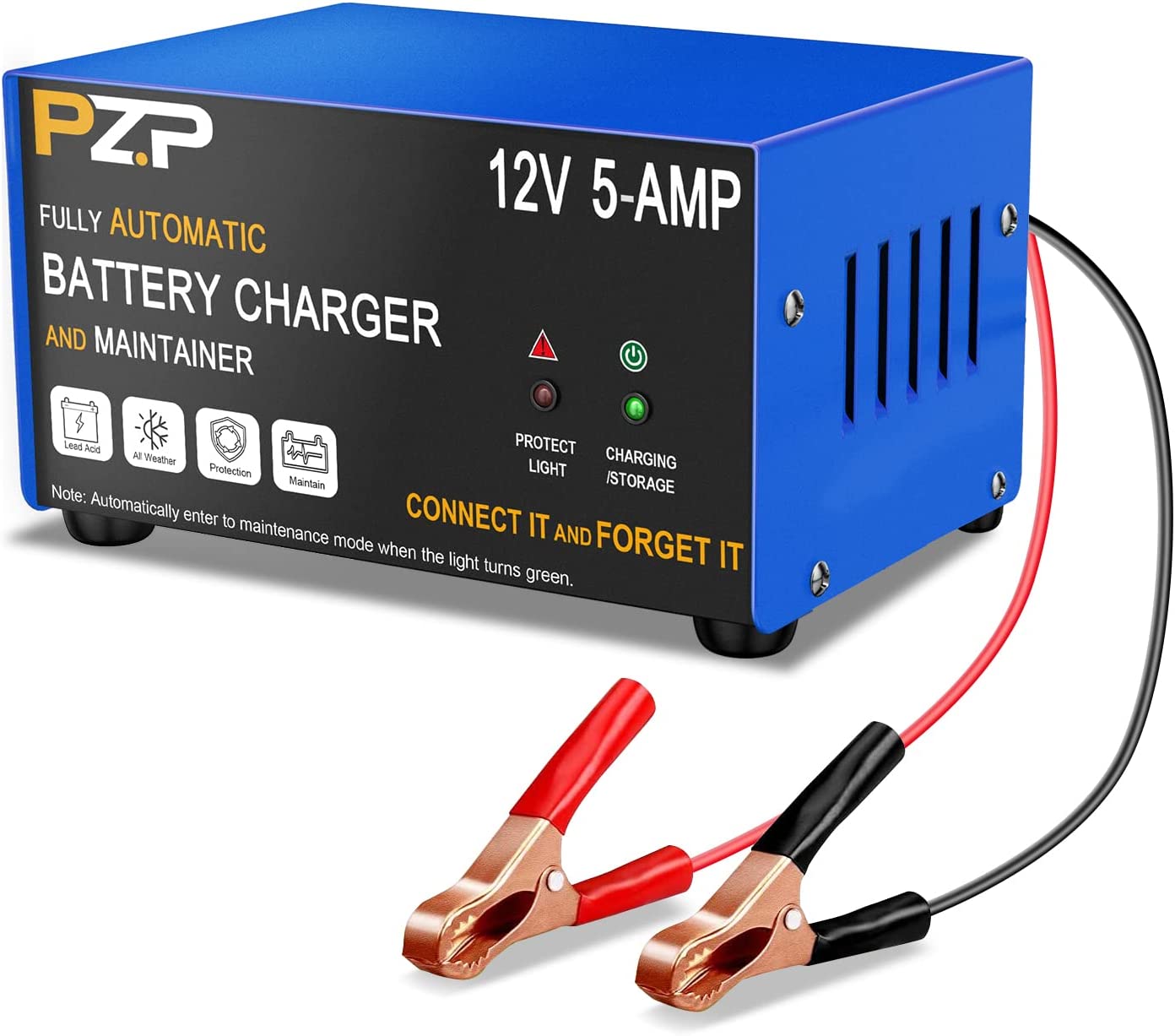
In an era where automobiles and machinery form the backbone of modern society, the importance of battery longevity and health cannot be overstated. Although batteries are the unsung heroes powering your vehicles and equipment, they can quickly become a point of failure if not properly maintained. This article aims to demystify Battery Chargers and Maintainers, two critical tools in extending the life and reliability of your batteries, thus ensuring uninterrupted functionality of your valuable assets.
Battery Chargers: An Overview
Battery chargers function as the primary means of restoring a depleted battery to its full capacity. They work by applying a constant voltage or current to the terminals, encouraging the flow of ions between the negative and positive plates within the battery cells. This process reverses the chemical reactions that occur during discharge, essentially "refilling" the battery's capacity.
Types of Battery Chargers
1.Trickle Chargers
Trickle chargers have carved a unique niche in the landscape of battery chargers. These chargers apply a steady, low-level current over an extended period, suitable for maintaining a charge but less effective for quick recharging. They operate under the premise that maintaining a battery's charge is just as important as recharging it. Contrary to popular belief, trickle chargers are not solely the domain of car enthusiasts or marine equipment owners; they are a versatile tool that can prolong the lifespan of various battery types, thus serving a broad range of applications.
Trickle chargers are ideal for:
-
Seasonal Equipment: Devices like lawnmowers, snowmobiles, and boats which aren't used year-round.
-
Classic Cars: Vehicles that are driven infrequently can benefit immensely from a trickle charger.
-
Daily Use Vehicles: Even your day-to-day car can benefit if it’s older or has a history of battery problems.
The following part, we listed some types of trickle chargers from PZP. PZP’s Trickle Chargers are no exception to this ethos. These chargers are engineered with precision, reflecting PZP's deep-rooted belief that "anything is possible" when it comes to providing robust and reliable solutions for battery maintenance.
PZP utilizes the latest advancements in microprocessor-controlled charging, ensuring each battery is charged to its optimal level without the risk of overcharging. This intelligent approach to battery management aligns perfectly with PZP's brand ethos of making "anything possible," even the prolonging of a battery's lifespan beyond conventional limits.
2.Smart Chargers
The advent of smart technology has revolutionized many aspects of our daily lives, from how we communicate to how we consume information. This technological wave has also dramatically improved how we manage and maintain batteries. One of the most notable advancements in this domain is the development of Smart Chargers. Unlike traditional chargers that simply infuse batteries with electrical current, Smart Chargers come with integrated microprocessors that adapt and optimize the charging process based on a battery's specific needs. Equipped with microprocessors, these chargers can adapt the charging process based on the battery's condition, making them both efficient and safe.
Given their advanced features, Smart Chargers are ideal for a range of applications:
-
Automotive Industry: For electric vehicles and conventional cars with advanced electrical systems.
-
Consumer Electronics: For rechargeable batteries in gadgets like smartphones, cameras, and laptops.
-
Industrial Applications: In settings where batteries are crucial, such as uninterruptible power supplies (UPS) for data centers.
3.Fast Chargers
These are designed for situations requiring quick recharging, although they may compromise battery lifespan if used indiscriminately.
Battery Maintainers: A Closer Look
While battery chargers often steal the limelight in discussions about battery health, battery maintainers deserve equal attention for their role in prolonging battery lifespan and ensuring optimal performance. Often mistaken for chargers, battery maintainers offer a unique set of features designed to keep your batteries at peak performance during long periods of inactivity or storage. Unlike chargers, Battery Maintainers are designed to keep a battery in a fully charged state without overcharging it. Maintainers are especially useful for batteries that will be left unused for extended periods, such as those in seasonal vehicles like boats or snowmobiles. A battery maintainer is an electronic device designed to provide a consistent but low electrical charge to a battery. Unlike chargers, which are built to recharge depleted batteries quickly, maintainers keep a fully or near-fully charged battery from losing its charge over time. The maintainer's purpose is to prevent the battery's natural discharge and chemical degradation, both of which can shorten the battery’s lifespan.
The Importance of Battery Maintainers
1.Extend Battery Life
Over time, batteries can deteriorate due to a build-up of sulphates on their plates. Maintainers help in minimizing this buildup.
2.Prevent Complete Discharge
Batteries that are allowed to fully discharge may suffer from decreased capacity and a shorter lifespan. A maintainer ensures that the battery's charge does not fall below a critical level.
When it comes to state-of-the-art battery solutions, PZP leads the charge with its range of high-quality, technologically advanced products. Among their standout offerings are their battery maintainers, which are explicitly designed to "Power the Possibility" of everlasting battery life. With a host of cutting-edge features and an unwavering commitment to customer satisfaction, PZP's Battery Maintainers are truly second to none. Here are some maintainers from PZP.
Comparative Analysis: Charger vs Maintainer
While both battery chargers and maintainers serve the common goal of battery health, their applications are distinct.
are ideal for batteries that have been entirely or substantially depleted.
are suitable for batteries that are stored for long periods but need to remain fully charged.
Conclusion
Understanding the nuances between Battery Chargers and Maintainers can significantly impact the longevity and reliability of your battery-operated devices and vehicles. While chargers are essential for recharging batteries, maintainers play an invaluable role in extending battery life and preventing the consequences of long-term storage. Investing in the appropriate device for your needs is not merely a question of functionality but of financial prudence and operational efficiency.
By empowering yourself with this knowledge, you are better positioned to make informed decisions about the care and maintenance of your batteries, thereby safeguarding the reliability of your crucial equipment and vehicles.


 English
 Español
 Pусский
 العربية
 Français